AI Marketing Agency in Melbourne, Australia | AI Marketing Company

YOUR GROWTH PARTNER

20 years’ expertise.

Powered by AI.

That’s

real ROI.

Data-driven Growth Strategy

Branding & Differentiation

Lead to Sales Conversion

AI Search & Answer Engine Optimisation

// HOW WE ROLL

20 years. 100m+ leads.
Millions in revenue growth.

ROI Growth Agency - Superhuman AI Marketing
// WHO ARE WE

ROI Growth Agency – AI Marketing Agency

01
Why Australian Brands Choose Our AI-Driven Marketing
icon

ROI Growth Agency is a high-performance AI marketing agency helping Australian brands scale with speed, accuracy, and zero wasted spend

  • AI forecasting & predictive modelling to identify the fastest path to growth
  • Automated optimisation systems that reduce costs and increase ROI
  • Human-led strategy for creativity, messaging, and brand differentiation
  • Full-funnel execution across search, social, content, and conversion
  • Transparent reporting with real-time performance insights
01
What Makes ROI Growth Agency Different
icon

We combine advanced machine learning with senior strategic oversight to deliver measurable growth across every digital channel.

  • We operate as a performance partner, not a traditional agency
  • We give clients clarity, control, and measurable outcomes
  • We build scalable systems, not short-term campaigns
  • We specialise in competitive Australian markets
  • Find out more about our digital marketing agency services https://roi.com.au/service/digital-marketing-agency-australia-2026/
02
Growth Strategies worth stealing
icon

No fluff. No guesswork. Just sharp, scalable strategy backed by data — and decades of results.

  • Pinpoint real growth opportunities
  • Map out your AI-powered revenue system
  • Position you to win in your category (and keep winning)
03
Turbocharged Lead Gen & Conversions
icon

Better Quality Leads, Bigger Value Customers, Higher Conversions, More Sales.

  • Reach your target market with AI precision
  • Turn your site into a high-converting lead machine
  • Turn your sales leads into customers and raving fans
04
AISEO / GEO / AEIO … EO that actually works
icon

When and where your customers search, ROI will have you in front of the pack.

  • Intelligent keyword topic clustering + intent modelling
  • Content that connects with your audience, AI and ranks
  • Optimisation that scales with results and streamlined implementation
05
Paid Ads that actually payoff
icon

We don’t run ads for clicks. We run systems that drive revenue.

  • Google Ads, Meta, LinkedIn – precision-managed
  • Smart retargeting strategies
  • AI-powered budget scaling to unlock ROI

We turn data into dollars

// TOP OF CLASS Case studies

Proof that’s in the performance

// Based in Melbourne?

Looking for a marketing agency based in Melbourne?

// TESTIMONIALS

Real results. Real business. Real ROI.

// CATCH UP ON ALL THINGS AI

From the ROI Blog

Social media ban
Australia’s Under-16 Social Media Ban – Impact & What’s Happening – 8 Jan 2026
Australian Internet Usage & Digital Behaviour Statistics
Australian Internet Usage & Digital Behaviour Statistics (2026) – 8 Jan 2026
Updating the google algorithm
Google Algorithm Updates 2026 – Impact on Australian SEO – 7 Jan 2026
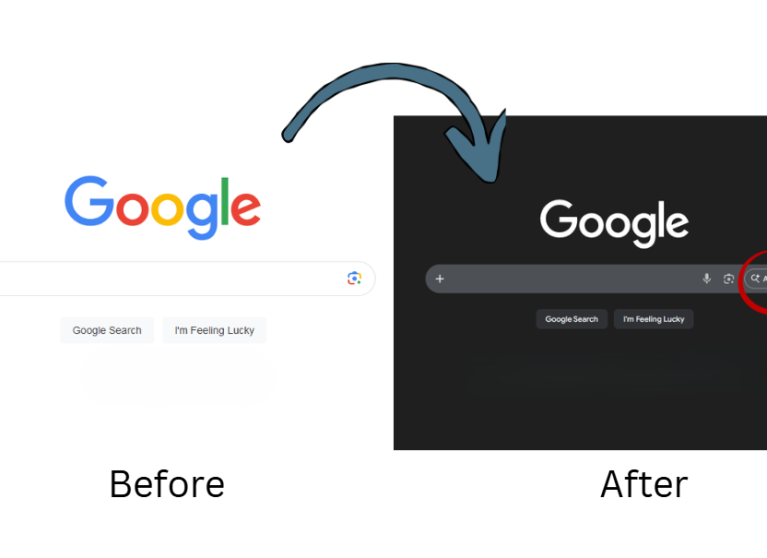
Google AI mode before and After the feature
Google ‘AI Mode – Did you see this? – 6 Jan 2026
AI search the new gen of SEO
SEO Essential Checklist for 2026: Australia – 19 Dec 2025
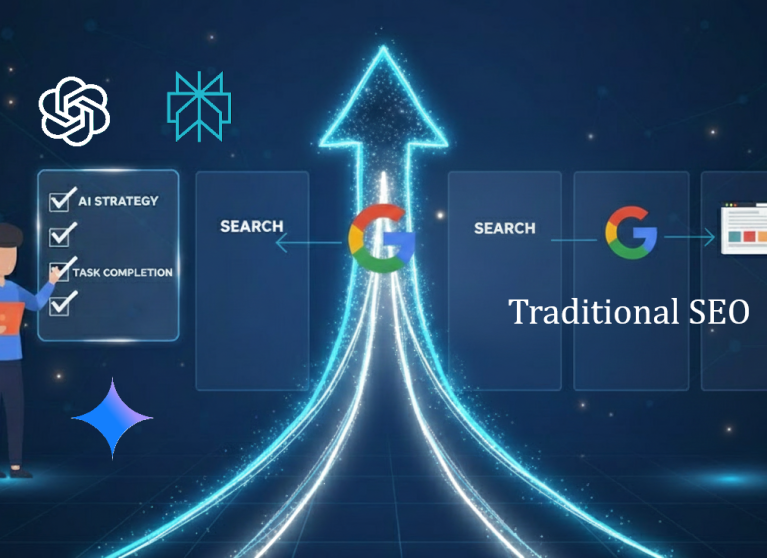
AI Search vs Traditional Search in Australia (2026)
Google AI in Australia (2026): Search, AI Overviews and AI Mode
Perplexity AI in Australia (2026): Adoption, Use Cases and Relevance
ChatGPT in Australia (2026): Usage, Context and Practical Impact
ChatGPT in Australia (2026): Usage, Context and Practical Impact – 18 Dec 2025
// KNOW WHAT YOU DON’T

Know How – People also ask

What people are asking today -

I’m blogging weekly but getting zero traffic – why?

Search engines like Google don’t automatically discover and rank new blog posts; they rely on a complex system of crawling, indexing, and ranking signals, with a significant emphasis on demonstrating authority and relevance to Australian searchers. Semantic Indexing: Current systems include advanced AI that understands the *meaning* of your content, not just keywords. Google’s ‘Marmalade’ update in late 2025 prioritises content that comprehensively answers user queries. Core Web Vitals Optimisation: Page speed, mobile-friendliness, and interactive elements are crucial ranking factors. Google’s Page Experience Report now features detailed Australian server latency data. E-E-A-T Signals: Demonstrating Expertise, Experience, Authoritativeness, and Trustworthiness is paramount. This includes author bios, citations, and secure website protocols. In 2026, simply publishing isn’t enough. Australian businesses need to actively optimise for these signals. Furthermore, Google’s local pack algorithms are increasingly sophisticated, meaning blog content needs to be geographically relevant and linked to your Google Business Profile. Compliance with the updated Australian Consumer Law regarding truthful advertising within blog posts is also essential to avoid penalties. Rather than navigating these complex technical requirements yourself, you can simply reach out to our team. At ROI.com.au, we can take care of all this for you—visit our contact page to get started.

Read More »

What are TikTok ads features in 2026?

As of early 2026, TikTok advertising operates on a highly sophisticated AI-driven platform, utilising advanced machine learning to optimise ad delivery and personalise user experiences. Current systems include a blend of automated bidding strategies and granular targeting options, all managed through the TikTok Ads Manager. Dynamic Creative Optimisation (DCO): TikTok now features DCO as standard, automatically testing different combinations of your ad elements (headlines, visuals, calls-to-action) to identify the highest-performing variations. Advanced Audience Targeting: Beyond demographic and interest-based targeting, you can now leverage ‘Lookalike Audiences’ based on your existing customer data uploaded via secure API integration, and ‘Custom Audiences’ built from website visitors or app users. TikTok Shop Ads: Seamless integration with TikTok Shop allows for direct product promotion within ads, driving conversions without users leaving the platform. Branded Effect Marketplace Expansion: Businesses can now create and sponsor highly interactive branded effects, increasing brand awareness and user engagement. In 2026, Australian businesses must adhere to updated ACCC guidelines regarding data privacy and ad transparency when utilising TikTok’s targeting capabilities. Compliance with the Online Safety Act is also crucial, particularly concerning ads directed at younger audiences. TikTok’s platform now includes automated checks to assist with this, but ongoing monitoring is still recommended. Rather than navigating these complex technical requirements yourself, you can simply reach out to our team. At ROI.com.au, we can take care of all this for you—visit our contact page to get started.

Read More »

How often does GA4 update my data?

Google Analytics 4 (GA4) doesn’t update in a single, scheduled batch. Instead, data processing is near real-time, utilising a streaming data pipeline and machine learning models to provide insights as quickly as possible. Real-time Reporting: GA4 now features a dedicated ‘Realtime’ report showing activity happening within the last 30 minutes. Standard Reports (Daily): The majority of standard reports are updated daily, typically between 9:00 AM and 12:00 PM AEST. This includes metrics like users, sessions, and conversions. Explorations & Advanced Analysis: More complex explorations and custom reports can take up to 24-48 hours to fully populate, as they require more intensive data processing. As of early 2026, current systems include enhanced data modelling within GA4, meaning data is often available *sooner* than the stated update windows. However, Australian businesses need to be mindful of data privacy regulations – GA4’s data retention settings and compliance with the Privacy Act 1988 (Cth) are crucial. In 2026, we’re also seeing increased focus on server-side tagging to improve data accuracy and control, particularly with browser privacy changes impacting cookie-based tracking. This impacts the speed and reliability of data collection. Rather than navigating these complex technical requirements yourself, you can simply reach out to our team. At ROI.com.au, we can take care of all this for you—visit our contact page to get started.

Read More »

How do I track AI citations for my business in Australia 2026?

As of early 2026, tracking AI citations – instances where AI-generated content references your business – relies on advanced semantic analysis and monitoring of digital signals across the web, going beyond simple keyword searches. AI-Powered Citation Detection: Current systems include algorithms that identify mentions of your business even when paraphrased or conceptually referenced by AI. Multi-Platform Monitoring: ROI.com.au’s platform now features monitoring across diverse sources including blogs, forums, social media, and AI-content generation platforms. Sentiment Analysis: We analyse the *context* of the citation, determining if it’s positive, negative, or neutral – crucial for reputation management. Attribution Modelling: The system links AI citations back to potential sources, helping understand which content is driving awareness. In 2026, Australian businesses must be aware of evolving data privacy regulations regarding AI-sourced information. The OAIC continues to refine guidelines around data collection and usage, meaning transparent tracking and responsible data handling are paramount. Accurate citation tracking isn’t just about vanity metrics; it informs your content strategy, identifies potential brand risks, and demonstrates the real-world impact of your online presence. Rather than navigating these complex technical requirements yourself, you can simply reach out to our team. At ROI.com.au, we can take care of all this for you—visit our contact page to get started.

Read More »

What’s the best way to prompt ChatGPT for business?

ChatGPT, as of early 2026, functions best when provided with highly specific, role-defined prompts – essentially, you’re instructing it to *act as* a particular expert to achieve a defined business outcome. The more context and constraints you provide, the more relevant and useful the output will be. Detailed Persona Assignment: Instead of “write a social media post”, try “Act as a marketing manager for a small plumbing business in Melbourne. Write a Facebook post promoting a winter heating system check, targeting homeowners aged 35-55.” Output Format Specification: Explicitly state the desired format – “Generate a table comparing three competitor pricing plans”, or “Write five subject lines for an email campaign, each under 60 characters.” Data Integration (via APIs): Current systems include ChatGPT integrations allowing direct access to your CRM or marketing automation platforms, enabling personalised prompts based on customer data. In 2026, Australian businesses must also be mindful of compliance. Prompts requesting content related to financial advice, health claims, or legal matters require careful review to ensure adherence to ASIC regulations and Australian Consumer Law. ChatGPT now features built-in disclaimers for sensitive topics, but responsible oversight remains crucial. Furthermore, prompts should avoid perpetuating biases or discriminatory language, aligning with Australian anti-discrimination legislation. Rather than navigating these complex technical requirements yourself, you can simply reach out to our team. At ROI.com.au, we can take care of all this for you—visit our contact page to get started.

Read More »

How to remove fake Google reviews in Australia 2026?

As of early 2026, removing fake Google reviews relies on utilising Google’s flagging system combined with demonstrating a pattern of inauthentic activity, and increasingly, leveraging advanced reputation management platforms that integrate directly with Google’s Business Profile API. Automated Flagging: Current systems include AI-powered review analysis within platforms like ROI.com.au, which automatically flags suspicious reviews based on language patterns, reviewer history, and IP address anomalies. Google Business Profile Dispute Process: You must still formally dispute the review through your Google Business Profile, providing detailed reasons for its inauthenticity. Reviewer Reporting: Reporting the reviewer’s profile itself as potentially fake is now features a more robust verification process by Google, increasing its effectiveness. Geolocation Verification: In 2026, Google places greater emphasis on reviewer geolocation; reviews from users demonstrably far from your business location are more easily flagged. The Australian Competition and Consumer Commission (ACCC) actively monitors online reviews, and Google is increasingly responsive to legitimate concerns about misleading or deceptive content. However, simply *claiming* a review is fake isn’t enough; you need demonstrable evidence. Google’s algorithms are also becoming more sophisticated at detecting coordinated review campaigns, but proactive monitoring and reporting remain crucial for Australian businesses. Rather than navigating these complex technical requirements yourself, you can simply reach out to our team. At ROI.com.au, we can take care of all this for you—visit our contact page to get started.

Read More »
// CHALLENGING THE LANDSCAPE

The Challenges – We help solve

What’s the difference between ChatGPT and Google search – do I need both?

As Australian SMEs navigate an increasingly complex digital landscape, understanding the tools available to drive growth is crucial. Right now, ChatGPT and Google Search are two technologies getting a lot of attention. Many business owners are asking: what’s the difference, and do I need both? The short answer is, very likely, yes. But understanding *how* to use each one effectively is where the real value lies. Google Search is fundamentally an information retrieval system. You type in a question, and it delivers a list of websites it deems most relevant. It’s fantastic for finding existing information – competitor analysis, industry reports, product research, or locating a local supplier. Think of it as a powerful research assistant, pointing you towards answers that already exist online. It’s built on indexing the web, meaning it’s constantly crawling and categorising publicly available content. ChatGPT, on the other hand, is a generative AI. It doesn’t *find* information; it *creates* it. You provide a prompt, and it generates original text based on the vast dataset it was trained on. This makes it incredibly useful for tasks like drafting marketing copy, brainstorming content ideas, summarising lengthy documents, or even creating different versions of ad text for A/B testing. It’s less about discovering what’s already been said, and more about producing something new. Here’s how this translates into practical benefits for your business: Content Creation: ChatGPT can dramatically speed up content production for your website, social media, or email marketing. SEO Enhancement: Use ChatGPT to generate keyword-rich content ideas, but always verify accuracy with Google Search. Customer Service: ChatGPT-powered chatbots can handle basic customer inquiries, freeing up your team for more complex issues. Market Research: While Google Search identifies trends, ChatGPT can help you analyse those trends and formulate potential strategies. Don’t view these tools as replacements for each other. Google Search remains essential for validating information and understanding the competitive landscape. ChatGPT excels at accelerating creative tasks and personalising customer interactions. Integrating both into your marketing strategy will give you a significant advantage. As AI continues to evolve – and we anticipate even more sophisticated capabilities in 2026 and beyond – mastering these tools will be vital for sustained growth. To get started, we recommend identifying one repetitive marketing task – perhaps writing social media captions – and experimenting with ChatGPT to see how much time it can save you. Then, use Google Search to analyse the performance of that content and refine your approach.


Read More »

Can you own multiple positioning territories simultaneously in 2026?

The short answer is yes, you can own multiple positioning territories simultaneously. However, it’s significantly more complex than it used to be, and success in 2026 and beyond will depend on a very deliberate approach. For years, marketing orthodoxy favoured ‘owning’ a single, clear position in the customer’s mind. Think of Volvo and safety, or BMW and driving performance. That simplicity is eroding. Customers are increasingly sophisticated. They don’t fit neatly into single segments anymore, and their needs are multifaceted. They’re also exposed to far more marketing messages than ever before. This means a single positioning statement, even a strong one, is less likely to resonate universally. We’re seeing a shift towards ‘portfolio positioning’ – holding distinct, yet complementary, positions for different customer groups or use cases. Here are a few key insights for Australian SMEs considering this strategy: Distinct Value Propositions: Each positioning territory *must* be built around a genuinely different value proposition. Don’t just re-word the same message. Think about different benefits, different problems solved, or different customer aspirations. Segment Specificity: Clearly define the customer segments you’re targeting with each position. Overlap here will create confusion and dilute your impact. Detailed persona work is essential. Brand Architecture Matters: How do these positions relate to your overall brand? A strong masterbrand can support multiple sub-brands or product lines, each with its own positioning. A weaker brand may struggle to stretch this far. Resource Allocation: Maintaining multiple positions requires more marketing investment. You’ll need dedicated campaigns, content, and potentially even sales teams for each territory. The risk, of course, is brand dilution. If your messaging becomes too fragmented, you risk losing clarity and failing to resonate with anyone. We anticipate that in 2027, businesses that haven’t actively managed this complexity will see diminishing returns from their marketing efforts. To determine if a portfolio positioning strategy is right for your business, we recommend a thorough market mapping exercise. This will help you identify potential positioning territories, assess their viability, and understand the resource implications. Start by analysing your existing customer base and identifying distinct needs and motivations.

Read More »

What navigation mistakes kill website conversion rates in 2026?

We’re seeing a lot of Australian SMEs missing opportunities with their websites, and often the problem isn’t content – it’s how people *move through* that content. In the next 12-18 months, poor navigation will become even more damaging as user expectations continue to rise. People are less patient and more accustomed to seamless digital experiences. Here are the key navigation mistakes we’re observing that directly impact conversion rates. Firstly, **overly complex mega-menus** are a major issue. While they seem comprehensive, they overwhelm visitors with too many choices. This creates ‘analysis paralysis’ – people get stuck trying to decide and often leave without engaging. We recommend prioritising key categories and using clear, concise labels. Think ‘fewer, bigger bets’ rather than trying to list everything. Secondly, **hidden navigation**. Burying important pages behind multiple clicks or within unconventional menus (like hamburger menus on desktop) is a conversion killer. Important information – like pricing, contact details, or key service pages – needs to be immediately accessible. We’re finding that users increasingly expect a persistent, visible navigation bar. Thirdly, **inconsistent labelling**. Using different terms for the same thing across your website creates confusion. For example, calling a service ‘Solutions’ on one page and ‘Services’ on another. This disrupts the user journey and erodes trust. We advise conducting a ‘navigation audit’ to ensure consistent terminology throughout your site. Poor mobile navigation: A responsive website is no longer enough. Mobile navigation *must* be optimised for touch and thumb reach. Tiny links and cluttered menus are frustrating on smaller screens. Lack of internal linking: Failing to link relevant pages together means visitors miss out on valuable content and potential conversion pathways. Strategic internal linking guides users deeper into your site and improves SEO. Finally, remember that navigation isn’t static. We strongly recommend using website analytics – specifically behaviour flow reports and session recordings – to understand how people are actually using your site. This data will reveal pain points and areas for improvement. Addressing these navigation issues isn’t just about improving user experience; it’s about directly boosting your bottom line. If you’re unsure where to start, a professional website conversion audit can pinpoint exactly where your navigation is letting customers slip away.

Read More »

What lead velocity rate indicates healthy pipeline growth in 2026?

Determining a ‘healthy’ Lead Velocity Rate (LVR) isn’t about hitting a universal number. It’s about understanding what growth looks like *for your specific business* and consistently achieving it. LVR measures the month-on-month growth of qualified leads – those prospects who’ve indicated genuine interest and fit your ideal customer profile. We’re seeing a shift in what constitutes strong LVR as we move into 2026, driven by increased market maturity and more sophisticated buyer behaviour. Historically, a 10% month-on-month LVR was considered good. However, in the current climate, and looking ahead, we advise Australian SMEs to aim higher. Here’s what we’re observing with our clients: Industry Matters: LVR benchmarks vary significantly. A software-as-a-service (SaaS) business targeting rapid expansion will need a higher LVR (20-30%+) than a local plumbing service focused on steady growth (5-10%). Sales Cycle Length: Longer sales cycles require a higher LVR to maintain pipeline momentum. If it takes six months to close a deal, you need a consistently strong influx of qualified leads to avoid pipeline gaps. Marketing Investment: Increased marketing spend should correlate with a higher LVR. If you’re investing more in lead generation, you should see a proportional increase in qualified leads. Lead Quality is Key: Don’t chase volume at the expense of quality. A 15% LVR with highly qualified leads is far more valuable than a 30% LVR filled with unqualified prospects. Focus on attracting the *right* leads. We’re finding that a consistent 15-20% LVR is a realistic and achievable goal for many Australian SMEs in 2026, provided it’s underpinned by a strong focus on lead quality and aligned with overall revenue targets. It’s also important to remember that LVR is a diagnostic tool, not a vanity metric. A declining LVR signals a need to analyse your lead generation efforts – are your campaigns still effective? Is your targeting accurate? Are you nurturing leads effectively? To determine your ideal LVR, start by calculating your current rate. Then, work backwards from your revenue goals to determine how many qualified leads you need to generate each month. This will give you a clear target to aim for and a framework for measuring your success. If you’re unsure where to start, a comprehensive lead generation audit can provide valuable insights and a tailored action plan.

Read More »

What resources do successful channel partners actually need?

We often hear from Australian SMEs wanting to build or optimise a reseller channel. A common question is: what do successful channel partners *actually* need from us to thrive? It’s more than just product and a margin. While those are table stakes, truly empowering partners requires a focused investment in resources that drive their sales and marketing efforts. Getting this right isn’t just about partner satisfaction; it’s about accelerating your revenue growth through a motivated and capable network. Many vendors underestimate the support required. Partners aren’t simply extensions of your sales team; they’re independent businesses needing to build their own brand and customer base. Here’s what we consistently see separates the high-performing partners from the rest: Dedicated Marketing Funds & Co-op Programs: This is critical. Partners need budget to run local campaigns, attend industry events, and generate leads. Co-op programs – where you match their marketing spend – are particularly effective. Think beyond just logos on brochures; consider joint webinars, targeted digital advertising, and even funding for local workshops. Sales Enablement Content – Tailored for Australia: Generic global content doesn’t cut it. Partners need sales presentations, case studies, and product demos specifically relevant to the Australian market. This includes addressing local regulations, competitor landscapes, and customer pain points. Lead Generation & Distribution: Don’t hoard all the leads! A consistent flow of qualified leads is the lifeblood of any reseller. Implement a clear lead distribution process, ensuring partners receive timely and relevant opportunities. Consider tiered lead allocation based on partner performance. Training & Certification: Ongoing training isn’t a ‘nice-to-have’, it’s essential. Partners need to be experts in your products and solutions. Invest in comprehensive training programs, ideally with certification levels, to demonstrate their competence to customers. Looking ahead, we anticipate increased demand for partners who can deliver complete solutions, not just individual products. This means providing resources to help them integrate your offerings with complementary technologies and services. Investing in these areas now will position your channel for success, not just in the current market, but as we move towards 2027 and beyond. The key takeaway? Successful channel partnerships are built on mutual investment. If you’re serious about growing through a reseller network, prioritise providing the resources your partners need to win. To understand where to focus your initial investment, we recommend conducting a partner needs assessment – a simple survey can reveal significant opportunities to improve engagement and drive sales.

Read More »

How to position upsells as problem-solving not profit-taking?

Many Australian SMEs hesitate to actively upsell, fearing it comes across as pushy or simply a way to extract more money from customers. That’s understandable. However, when positioned correctly, upselling isn’t about profit-taking; it’s about problem-solving and delivering even greater value. The key is shifting your mindset – and your messaging – from ‘selling more’ to ‘helping more’. We’ve seen businesses dramatically improve their upsell success rates by focusing on genuine customer needs. Here’s how to make that shift: Understand the ‘Job to be Done’: Forget features, focus on the core problem your product or service solves. Upsells should address related, but distinct, aspects of that same job. For example, if you sell accounting software, an upsell isn’t just ‘premium features’; it’s ‘simplified payroll management’ for businesses struggling with that specific task. Timing is Everything: Don’t bombard customers with upsells immediately after a purchase. Wait until they’ve experienced initial value. Trigger upsells based on behaviour – are they using a specific feature heavily? That signals a need for something that enhances that experience. Frame Upsells as Solutions: Instead of “Would you like to add X for an extra $Y?”, try “Many of our customers find that X helps them achieve Z. Would you like to explore how it could benefit you?” This positions the upsell as a proactive solution, not an opportunistic add-on. Personalisation is Paramount: Generic upsells are easily ignored. Leverage customer data to offer relevant upgrades. If a customer purchased a basic marketing package, suggest an advanced analytics module if their website traffic is growing rapidly. Effective upselling isn’t about tricking people into spending more. It’s about anticipating their evolving needs and providing solutions that genuinely improve their outcomes. By focusing on value and relevance, you can build stronger customer relationships and unlock significant revenue growth. Don’t think of it as ‘selling up’, think of it as ‘helping forward’. To start, analyse your customer journey and identify pain points that aren’t fully addressed by your core offering. These are your prime upselling opportunities. Then, craft messaging that clearly demonstrates how an upsell solves that specific problem.

Read More »
The bottom line

Are you ready to grow?

×
Get your Free AI Marketing Audit
Find out if your website is ready for the AI revolution


    Thank you! We'll be in touch soon.